 PL
PL

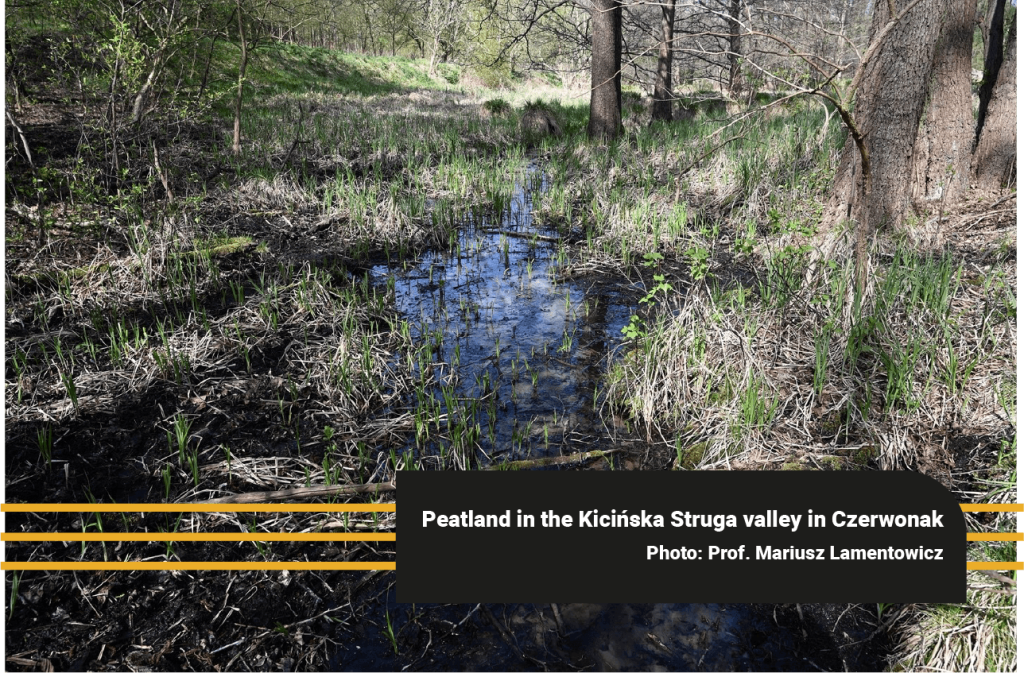
For many years, there was a perception that wetlands were a bad thing – wasteland, impractical, waterlogged land that became an obstacle to human activity. This misconception led to the drainage of a vast number of wetlands (in Poland – over 80%, which per unit area translates to over 1 million hectares!), which are crucial not only for local biodiversity but also for counteracting the effects of drought. Due to the rapid decline of wetlands since the beginning of the 20th century, an international agreement – the Ramsar Convention on the Conservation of Wetlands – was signed on February 2, 1971.
Today, we recognize the importance of wetlands – which is why we strive for renaturalization, or the restoration of former wetlands, peat bogs, and floodplains, both in agricultural and forest areas and within urban boundaries. This strengthens natural water retention, minimizes the effects of drought, and prevents flooding.
What are wetlands?
Wetlands are aquatic and terrestrial areas that combine the characteristics of land and water thanks to the permanent or periodic saturation of the soil with water. Their unique characteristics create ideal conditions for plants and animals, often found only there.
Wetlands primarily include marshes (areas of soft ground with large amounts of standing water, covered with reeds and shrubs), bogs (boggy areas of land where water mixes with deep mud), peat bogs (areas where dead plant matter, i.e., peat, accumulates), and riparian wetlands (shallow bodies of water, floodplains, and the shores of rivers, lakes, and seas).
Unusual fauna and flora
Wetlands thrive on abundant life. They are a home to many plants and animals. Moreover, wetlands harbor plants and animals found nowhere else.
Wetlands are home to hygrophytic and helophytic plants, which, due to their unique properties, cannot grow in dry soils but are perfectly adapted to the constant excess water and oxygen-poor substrate typical of wetlands. Specific wetland vegetation includes:
- sphagnum moss (Scheuchzeria palustris) – a rare plant from the monotypic family Bogwort, growing exclusively in wet peat bogs,
- sphagnum trifoliata – a perennial with characteristic trifoliate leaves, found in quagmires and marshes,
- sphagnum mosses – key mosses that form peat bogs, storing vast amounts of water and acidifying the environment,
- schweed and common marsh – small shrubs closely associated with acidic raised bogs and boggy forests,
- sundews (Drosera) – insectivorous marsh plants that, due to the lack of nutrients in wet peat, feed on insects.
Wetlands are also home to a wealth of animals. Special species closely associated with this environment and rarely seen elsewhere live there. These include birds such as:
- the redshank – a water and marsh bird that nests in wet meadows and marshes,
- the common snipe – a bird that lives in marshy marshes and soft soil, where it searches for worms,
- the aquatic warbler – one of the most endangered birds in Europe, nesting almost exclusively in open, wet peat bogs and low meadows.
Wetlands are also home to animals that are not always closely associated with this habitat, but prefer wetlands. These include the moose, which loves marshes and can wade through deep mud with its wide hooves; the osprey, as well as many other species of snakes and amphibians that spend much of their time near muddy water, although they can also venture onto dry land.
Wetlands in cities and their role
Floodplains are extremely important for water retention and soil water retention. Wetlands can also function in urban areas. Poznań is a prime example, where valuable wetlands can be found in areas such as the Junikowski Stream, the Bogdanka River, the Piątkowski Forest, the Żurawiniec Nature Reserve, and the Ratajskie Traszki ecological site. Additionally, the valleys of rivers such as Warta, Główna and Cybina are also included. In 2025, Poznań joined cities such as Geneva in Switzerland, Mechelen in Belgium, Arles in France, Nagoya in Japan, and Hangzhou, Suzhou, and Fuzhou in China in achieving the Wetland City Accreditation certification. Urban wetlands act like giant natural sponges: during heavy rains, they protect streets from flooding and flash floods, and during hot summer days, they slowly release moisture, lowering ambient temperatures and replenishing groundwater.
Many countries around the world are implementing the sponge city concept and attempting to reduce the risk of flooding or land degradation.
Europe
The Danish capital, Copenhagen, or more precisely, Enghave Park, has been modernized to serve as a large retention reservoir, collecting excess water during heavy rains. It currently serves as a recreational park for residents. Furthermore, Denmark is implementing a strategy to replace sealed surfaces with green infrastructure and parks capable of withstanding temporary flooding.
In Germany, we have the example of the Tempelhofer Feld project, where a former airport was transformed into a vast public park and nature reserve that preserves biological open space and natural retention. Furthermore, in Berlin’s Adlershof district, new developments are abandoning traditional drainage systems in favor of green infiltration basins.
In Rotterdam, in the Netherlands, water parks are being created – places that serve as playing fields and meeting spaces during droughts and become safe retention basins for rainwater during heavy rains. Moreover, the city is investing in green roofs and rain gardens: it is massively integrating nature into the urban landscape to avoid concrete.
China
Wuhan lies in the floodplains of the Yangtze River and has historically struggled with catastrophic flooding. Today, it is a pioneer in combating flooding. The former concrete, degraded riverbank has been transformed into a multi-level nature park. Native vegetation has been planted there to withstand periodic flooding, and traditional embankments have been replaced with gentle, green slopes that absorb water. Additionally, over 200 projects in the area have transformed squares and urban wastelands into rain gardens, retention ponds, and constructed wetlands. Instead of channeling rainwater through pipes, the water infiltrates the ground and nourishes the local vegetation.
As one of the fastest-growing metropolises in the world, Shenzhen has integrated blue-green infrastructure with dense high-rise development. Shenzhen Bay Park is a unique project spanning 13 kilometers of coastline. Heavy concrete infrastructure and buildings are completely banned from the immediate flood zone. Instead, natural mangrove forests and wetland ecosystems have been restored, effectively dispersing storm surges and protecting this city of 12 million people.
Also in Shenzhen, the Fenghuangcheng area is a modern district designed from the ground up using sponge city technology. Rainwater from the skyscraper roofs and permeable sidewalks flows through winding channels (instead of straight concrete canals) into natural filtration basins and park ponds.
Polish cities are also increasingly implementing projects to de-seam impermeable surfaces and de-concrete public spaces, leveraging EU support from programs such as FEnIKS (European Funds for Infrastructure, Climate, Environment) and the European Funds for Eastern Poland. Gdańsk has implemented a policy that treats greenery and water as a single, interconnected system. To protect both water and nature, blue-green strips (i.e., ecological corridors along watercourses and natural areas) are being created. Local authorities are paying close attention to valley protection – the city is protecting wild river valleys and meadows instead of transforming them into concrete areas.
In Bydgoszcz, meanwhile, blue-green infrastructure is being developed through retention investments and the restoration of natural water processes. The city is currently implementing the “Blue-Green Bydgoszcz ” project, which involves the construction of dozens of new retention reservoirs and rainwater treatment plants, which can then be used for watering plants.
As the examples above demonstrate, Poland is also increasingly investing in wetland restoration, retention, and blue-green infrastructure. However, more needs to be done to protect us and nature from the effects of drought.
Wetlands and their role were mentioned at the third conference, including in a presentation by Prof. Dr. Hab. Mariusz Lamentowicz, “Wetlands in the City – Rewetting, Retention, and Mitigating the Impact of Drought.”
