
 PL
PL

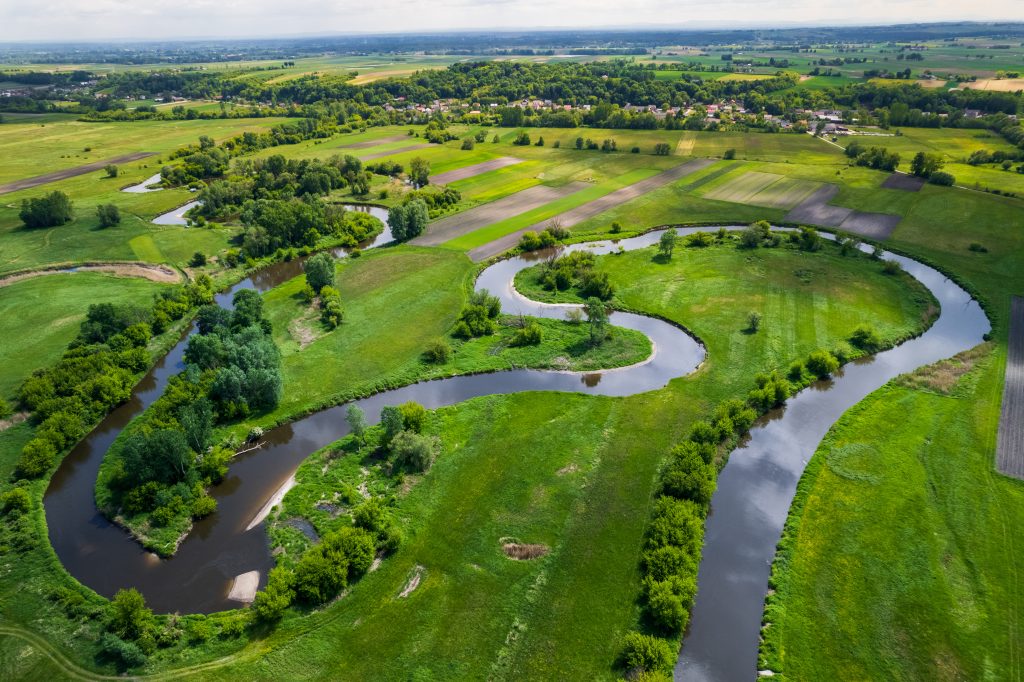
Today, the last Sunday of September, marks World Rivers Day, an observance established by the United Nations in 2005. On this significant day, let us consider the invaluable roles rivers play, whether in terms of ecosystems, the economy, or tourism. The importance of natural rivers within the Polish landscape deserves special emphasis; it is precisely unregulated rivers that cope best during periods of water scarcity and effectively mitigate the effects of the deepening drought in our country. When addressing the impacts of drought, the priority is to leverage the natural character of rivers and undertake new initiatives aimed at restoring them to their pre-intervention state – a process known as renaturalization.
The significance of renaturalization in mitigating the effects of drought
One of the most effective ways to combat hydrological drought – a situation where river water levels are very low – is river renaturalization. This process involves restoring rivers to a state as close to natural as possible, creating conditions that allow water to be retained in the landscape for longer periods.
In practice, renaturalization can entail, among other measures, removing concrete bank reinforcements, dismantling unnecessary barriers and dams, and restoring rivers to their natural, more meandering courses. Such actions slow down water runoff, allowing water to remain within the river valley for a longer time. Preserving rivers or river sections that retain a near-natural character is also crucial. Renaturalization increases the entire region’s resilience to drought.
Given the increasing frequency of drought periods, protecting natural rivers and restoring their functions should therefore be treated as part of a broader water management strategy. Instead of draining water from the landscape as quickly as possible, it is worth creating conditions that allow it to be retained where it is most needed.
Restoring natural river processes is one of the measures included in the updated drought effects counteracting plan (measure KR1 – uDECP, Table 16). The document envisages, among other things, strengthening integrated water resource management at the river basin and catchment scales to mitigate the effects of drought, increasing landscape, soil, and ecosystem water retention, and limiting rapid water runoff. River renaturalization aligns with both of these areas of action, as it enables better utilization of rivers’ natural water-retention capabilities and enhances environmental resilience to drought.
A natural, meandering river freely shapes its own channel, creating bends, oxbow lakes, and floodplains – and with them, diverse habitats for plants and animals. This natural river rhythm is vital not only for nature but also for water resources; it allows the landscape to retain more water, slows runoff, and boosts water retention – factors of particular importance during droughts. Natural watercourses also foster biodiversity, improve water quality, and create conditions that allow many plant and animal species to thrive.
However, any river restoration efforts must be preceded by a thorough analysis of environmental, social, and economic conditions. Not every river is a candidate for restoration. Nevertheless, it is worth emphasizing that natural rivers are our allies in the fight against drought; we should therefore strive to restore them to the state they were in prior to human intervention.
What does river renaturalization involve?
A river’s natural course can be restored in many ways. These include, among others:
- Restoring natural river meanders
Rivers with winding courses flow more slowly; this extends the time water takes to drain from the catchment area, allowing it to soak into the ground and replenish groundwater reserves rather than flowing immediately out to sea.
- Restoring and protecting wetlands, peatlands, and marshy areas
Natural river valleys abound with wetlands. These act like a giant sponge, absorbing excess water during high-flow events and slowly releasing it during periods of drought. For many years, policies in Poland and around the world focused on draining wetlands; however, in recent years, efforts to combat drought have led to their restoration to a natural state.
- Preserving riparian forests
Riverside vegetation retains water in the soil, limits soil erosion, and slows surface runoff, giving water time to infiltrate the ground. That is why it is crucial to allow riparian forests to develop freely along riverbanks.
- Renaturation of cut-off river channels
Restoring oxbow lakes is one of the most effective methods of natural water retention, directly minimizing the effects of drought. Oxbow lakes act as natural retention basins that hold water within the landscape, reducing the need to construct massive concrete retention reservoirs.
- Removing barriers to fish migration
Eliminating obstacles such as dams and weirs is a crucial aspect of river ecosystem conservation, taking on particular importance in the face of ongoing drought. Restoring river connectivity during periods of water scarcity is vital for the survival of many fish species.
- Restoring natural floodplains
The renaturization of river valleys is one of the most effective drought-mitigation strategies, relying on nature-based solutions. Although floodplains are primarily associated with flood protection, they play a key role in combating agricultural, hydrological, and hydrogeological droughts.
Regulated river vs. natural river
During a drought, the difference between a river modified by humans and one that has retained its natural character becomes particularly apparent. It is not merely a matter of the channel’s appearance; the way a river flows and connects with the surrounding landscape plays a crucial role in how much water remains in the environment.
A regulated river – characterized by a straightened and often reinforced channel – efficiently drains water from the catchment area. The water flows rapidly through the channel and leaves the region. A meandering river accompanied by a natural floodplain functions quite differently. River bends, oxbow lakes, wetlands, and periodically flooded areas slow the flow, allowing water to remain in the landscape for longer.
This is especially significant during prolonged droughts. A natural river and its valley form a kind of water storage system; instead of draining water out of the catchment area as quickly as possible, they retain it and gradually release it back into the environment.
A regulated river channel, by contrast, can act like a drain – rapidly carrying water away and contributing to a drop in the surrounding groundwater levels. A natural river is a more complex system in this regard; under the right conditions, it can both absorb water from the surrounding area and recharge groundwater, thereby helping to maintain soil moisture and support vegetation.
For this reason, natural river valleys become particularly valuable landscape features during droughts. The water retained within them sustains plant and animal life, while moist habitats enhance the entire ecosystem’s resilience to periods of water scarcity. Thus, a naturally functioning river is not merely a conduit for flowing water; it is part of a larger system that helps retain water and make it available when it is most needed.
Moreover, unregulated rivers mitigate the drying out of surrounding fields by maintaining higher microclimatic humidity, whereas regulated rivers do nothing to alleviate agricultural drought. This is particularly significant regarding crop yields; drought can reduce the supply of agricultural produce in stores, thereby driving up food prices considerably.
Recent years have shown that the problem of drought is increasingly affecting our lives in various ways. This makes water retention – both large-scale and small-scale – crucial. River renaturalization is an essential component of retaining water within the landscape. On the occasion of World Rivers Day, let us pay special attention to the vital role that natural watercourses play in both natural and anthropogenic environments.
