
 PL
PL

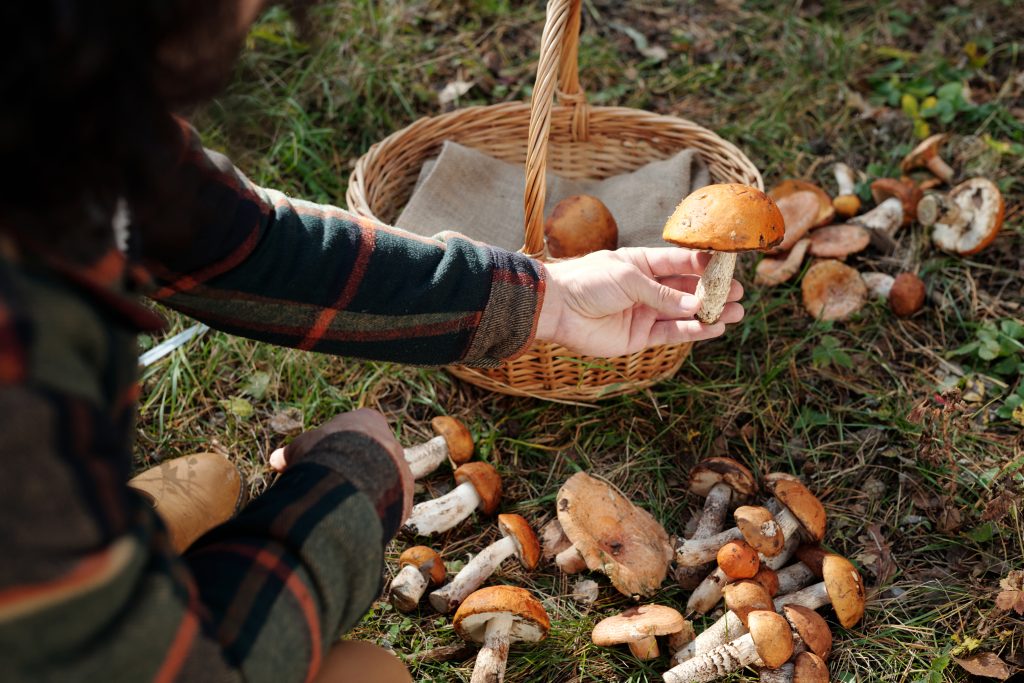
September has arrived – the mushroom-picking season has already started. In their spare time, many of us will head to the forest to gather the bounty nature provides. But what is the situation like this year? Will we find the woods empty? And what about the weather? Is there truth to the saying that something springs up “like mushrooms after rain” implying rapid growth?
Typically, in September – as we slowly bid farewell to summer and welcome autumn – rainfall increases. Shouldn’t we, then, already be seeing a rise in the number of mushrooms? Unfortunately, a single rainy day – or even a few – does not guarantee an immediate flush. The forest can remain “dry” despite the rain; what matters most is not just the amount of rainfall, but the moisture retained in the soil and the layer of forest litter.
What really determines a mushroom flush?
One of the most important factors influencing the abundance of mushrooms in forests is the moisture level of the soil and the forest litter. Mushrooms require adequate moisture to produce fruiting bodies – after all, water is essential for their growth. Light, short-lived rain may evaporate quickly or fail to deliver enough water to the deeper layers of the substrate, leaving the fungi insufficiently hydrated. The forest’s condition following a prior drought is also crucial; if the forest litter has not had time to recover, mushrooms will appear only sporadically at best.
Precipitation is another key factor. What matters is not just the total amount of rainfall, but also its timing and intensity. A series of steady, moderate rains is far more beneficial for the soil than a brief, torrential downpour. Heavy but short-lived rain often fails to soak adequately into parched soil, meaning the substrate remains insufficiently hydrated despite the rainfall.
Temperature is also important – mushrooms require suitable thermal conditions to grow. Warm nights and high humidity are most favorable for them.
Why might the first autumn rain not be enough?
During prolonged droughts, it is not only the upper layers of the forest that dry out; the water deficit also affects conditions in the deeper soil layers and the forest litter. Consequently, the litter layer, forest floor vegetation, understory, and tree crowns must all function under conditions of limited water availability and compete with one another for access to it. After rainfall, time is therefore required for moisture to be retained in the environment and for all water-dependent organisms to receive an adequate supply.
Water conditions from an earlier period – such as precipitation levels – also influence subsequent fungal growth. The end of a meteorological dry spell does not necessarily mean the end of the drought’s effects. The first autumn rain ends the period without precipitation, but it does not necessarily end the drought itself.
How long do we have to wait for mushrooms to appear after rain?
There is no hard-and-fast rule here. How fungi respond depends on many factors, such as the specific species and habitat conditions. Furthermore, we must consider whether the rainfall actually improved soil moisture or simply ran off the surface into the nearest river. If there was a prolonged drought beforehand, the effect might be weaker due to poor soil quality – the ground effectively behaving like a concrete crust. However, if the soil was already sufficiently moist, these favorable conditions could lead to the faster emergence of fruiting bodies.
There is no single “flush indicator” that applies universally across Poland. Many factors – beyond just rainfall – influence whether a forest will yield an abundance of mushrooms. These include:
- the species and age of the dominant trees in the forest
- the forest type (coniferous, deciduous, or mixed)
- soil type and fertility
- shade and density
- local humidity levels
- terrain
- specific mushroom species
Even the same species can appear in different parts of the forest depending on weather conditions; for example, the occurrence of the penny bun mushroom changes with shifting temperature and humidity levels.
What conditions do Polish mushrooms require?
Penny bun (Boletus edulis) – prefers moist, cooler conditions. Its fruiting can be significantly impaired during prolonged periods of low rainfall. Extended spells of high temperatures combined with dry soil are particularly detrimental.
Bay bolete (Imleria badia) – also requires adequate soil moisture; consequently, following a long drought, its fruiting bodies may appear later or in smaller numbers. However, an improvement in moisture conditions can foster a subsequent flush.
Brown birch bolete (Leccinum scabrum) – associated with birch trees; its occurrence and fruiting depend, among other factors, on soil water availability. During drought, host trees also experience water stress, which can indirectly affect their relationship with mycorrhizal fungi.
The slippery jack (Suillus luteus) is primarily associated with pine trees and, like other mycorrhizal fungi, responds to the conditions of its habitat; fruiting may be limited in dry, warming soil.
Drought does not affect all species in the same way. Penny buns, bay boletes, and birch boletes require adequate moisture, but their response also depends on the forest type, soil, temperature, and the condition of the trees with which they live in symbiosis. Consequently, rainfall does not necessarily trigger uniform growth across all species; depending on local conditions, some species may appear in greater numbers, while others continue to show the effects of the earlier water deficit.
Does drought mean there won’t be any mushrooms at all in the autumn?
Fortunately, no. Drought may limit the number of mushrooms, delay their development, or alter the locations and species that are easiest to find, but it does not mean a total absence of mushrooms. Even a late improvement in conditions can have a positive effect on mushroom yields. However, it is important to remember that a bountiful harvest depends not just on the most recent rainy day, but on the nature of the rainfall over several days or even weeks – specifically the quantity, intensity, and timing.
The abundance of mushrooms in autumn is the result of conditions that have developed over many weeks or even months. The formation of fruiting bodies depends not only on current rainfall but also on factors such as soil and air moisture levels during the drought and the drought’s duration. Consequently, the mushroom season in Poland is changing.
The autumn mushroom flush – or the lack thereof – is a perfect example of how the effects of drought do not vanish with the first rainfall. Poland is grappling with water shortages that cannot be remedied by isolated, even very heavy, downpours. We need moderate, prolonged rainfall that remains in the landscape to create ideal conditions for mushroom growth and development. That is why, in our fight against drought, we place great emphasis on natural water retention measures. In the update to the drought effects counteracting plan currently being prepared, we highlight specific examples of retention measures, thereby encouraging local authorities – who play a pivotal role in water and land-use management – to implement such actions. More information on combating drought can be found in the “News” section.
