 PL

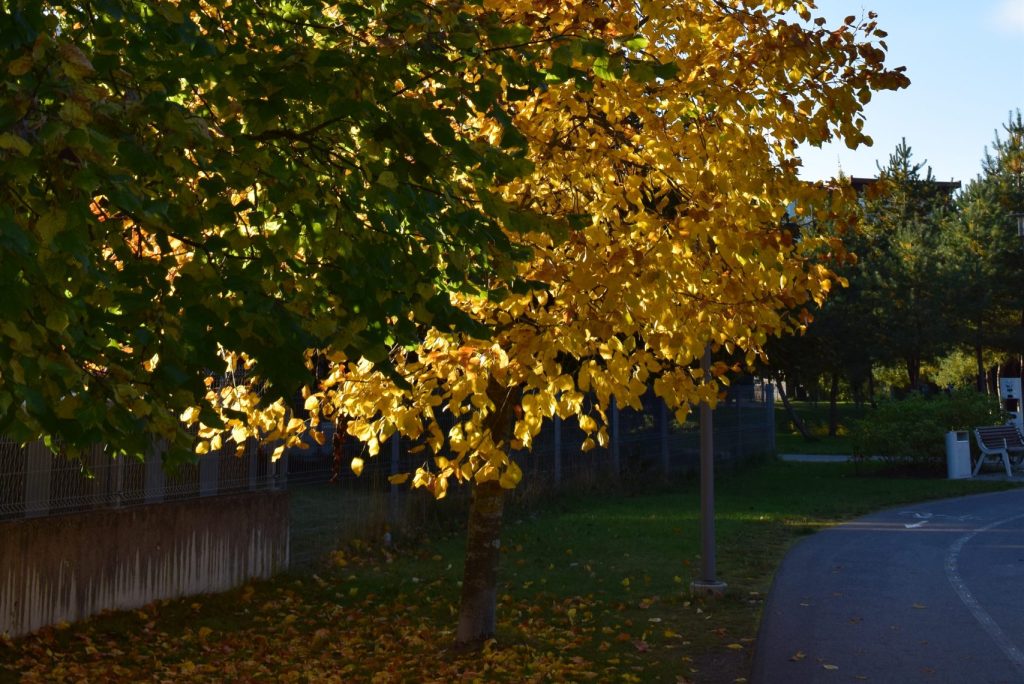
The astronomical autumn has arrived. For many of us, it is primarily associated with colorful leaves on trees, autumn rain, and mushroom picking. In recent years, however, we have fewer and fewer opportunities to enjoy the classic “golden Polish autumn” that we remember from our childhood. One of the reasons for this is the increasing frequency of drought.
Premature yellowing, browning, and the shedding of leaves are among the less obvious consequences of drought. Such phenomena can be directly linked to drought conditions and the fact that trees lack access to a sufficient amount of water.
Do falling leaves always mean that autumn has arrived? Or could it be the result of water stress experienced during the summer?
A forest filled with gold and red – this is the image most of us associate with a classic “golden Polish autumn” when we think of September or October. In recent years, however, our expectations have increasingly diverged from reality. Autumnal processes are beginning several weeks earlier than usual. It is no longer a given that we will be able to enjoy the traditional atmosphere of autumn throughout October and November, as we once did. Increasingly, afternoon walks in early September reveal leaves scattered across the ground rather than still clinging to the branches. In 2025, in the Lower Silesia region, trees began shedding their leaves as early as the end of August. This anomaly is about much more than a spoiled autumn photo opportunity.– it is a clear consequence of water stress.
When we think of climate change in Poland, we often picture mild, snowless winters or summer heatwaves with temperatures approaching 40°C. Yet, there are other, less obvious effects. A lack of adequate rainwater retention, sudden torrential downpours that cannot soak into the soil, and prolonged periods of high temperatures – all of these factors accelerate natural processes, such as the drying and shedding of leaves, effectively shortening our autumn season.
It is not just climate change that is to blame, but also infrastructure
It all begins with climate change – a lack of access to water causes leaves on trees to turn brown and die. However, inadequate infrastructure, a lack of water retention, and the failure to prepare for the effects of drought also plays a detrimental role.
Climate change and environmental pollution lead to significant heating of urban areas during the summer. The “urban heat island” effect, combined with high greenhouse gas emissions and increased air pollution from vehicle exhaust, results in higher temperatures within cities and a decline in the quality of the air we breathe. During heatwaves, urban plants deplete water resources more rapidly and suffer the effects of drought more acutely than those in forests. Limited rainfall fails to provide sufficient moisture to the soil, while the prevalence of concrete in urban environments hinders water retention. These sealed, impermeable surfaces prevent water from reaching the ground and restrict the space available for root systems, making it extremely difficult for trees to function.
When plants encounter water stress, they react. Their defense mechanism primarily involves the production of ethylene and abscisic acid, which accelerate leaf aging. The plant also cuts off the supply of water – and, consequently, essential nutrients – to the leaves, causing them to wither and fall off. Through this response, trees limit further moisture loss via evaporation; once the leaves are shed, the trees no longer need to supply them with water.
Which tree species cope worst with drought?
In Poland, many of our native tree species – such as lindens, hornbeams, and birches – are struggling. These species have traditionally been well adapted to Poland’s climatic conditions. However, as the climate changes, the weather is becoming increasingly unpredictable, and these plants are unable to cope with new conditions for which they were not prepared.
The negative consequences of short autumns
Leaves are essential to the process of photosynthesis, through which trees convert solar energy into chemical energy. Photosynthesis is vital for all living organisms, as it replenishes the atmosphere with oxygen and helps regulate carbon dioxide levels. Furthermore, water stress in trees leads to additional complications: weakened trees are more susceptible to disease, more likely to wither, and more prone to breaking during high winds. Consequently, developing infrastructure that supports water retention not only protects urban vegetation but also enhances the quality of life for people.
Moreover, the absence of leaves exacerbates the “urban heat island” effect and degrades the local microclimate. Trees cool their surroundings through evapotranspiration – the process by which water evaporates from their leaves. When trees lose their foliage prematurely, they are unable to improve local humidity levels, which negatively impacts our well-being. If trees begin shedding their leaves as early as August or September – as occurred in 2025 – it inevitably leads to higher temperatures within the city. In such conditions, trees can no longer shield us from parched air, nor can they provide us with shade.
Trees protect us at every turn; they serve as our natural filter. Green leaves act as a living absorber of dust and harmful exhaust fumes. When these leaves fall too early, pollutants from the streets end up directly in our lungs.
The premature shedding of leaves by urban trees – often a defensive response to drought, high temperatures, and environmental pollution – has a direct, negative impact on the quality of life, health, and safety of city dwellers. This phenomenon, sometimes called a “false autumn,” strips us of our natural protection much sooner than the natural cycle of the seasons would dictate.
The sight of withered, leafless trees in the middle of summer or early September subconsciously intensifies our sense of climate anxiety. We lose the aesthetic and therapeutic benefits that come from being surrounded by lush, green vegetation. That is why it is so important to care for nature – most effectively through water retention. We encourage you to explore the advice provided on the “Stop Drought! Start Retention!” website, so that we may all continue to enjoy a long, beautiful, golden autumn in the future.
