
 PL
PL

Changes in winter weather and climate – less stable snowpack, more frequent snowmelt, and more rainfall in winter – have direct consequences for urban water management. Problems often arise due to a lack of knowledge about how to properly manage snowmelt. The best solution to this problem is retention and blue-green infrastructure that help manage excess water. Therefore, cities must invest in retention solutions.
Current Weather Situation
Due to climate change, winters are no longer as stable and predictable as they were twenty years ago. For some time now, we have been experiencing winters with a lack of snow. Temperatures above 10 degrees Celsius (50 degrees Fahrenheit) are common, with rain replacing snow. Rapid thaws, which occur on warm, sunny days, cause sudden water runoff that is more difficult to control. The year 2026 brought unexpected frosts and periods with heavy snowfall, an exception to the new “norm.”
According to climate reports, snow cover in Poland has changed significantly in recent years. Between 1952 and 1990, the average snow cover was approximately 49 days. Between 1991 and 2012, it was only 44 days, and between 2012 and 2020, this period shortened to just 40 days. The most significant changes are observed in lowland areas. Between 1961 and 1990, snow cover in the lowlands lasted approximately 40 days. Between 2011 and 2020, the snow cover in these areas lasted only 18-20 days.
These data show a clear trend of shortening the snow cover period, particularly in lowland regions.
We also observe a decrease in snow cover each year. In previous decades, it ranged between 2.5 and 12.9 cm, while current estimates suggest that the value has been between 1.7 and 9.7 cm recently. Due to the uneven distribution of snow cover, some regions of Poland are at greater risk of drought caused by a lack of soil water resources. Significant fluctuations in snow cover – at different times, with varying frequency and volume – combined with frequent episodes of rapid melting mean that not only does water not have time to infiltrate the soil, but also that some regions are vulnerable to flooding.
What Happens to Meltwater in Cities?
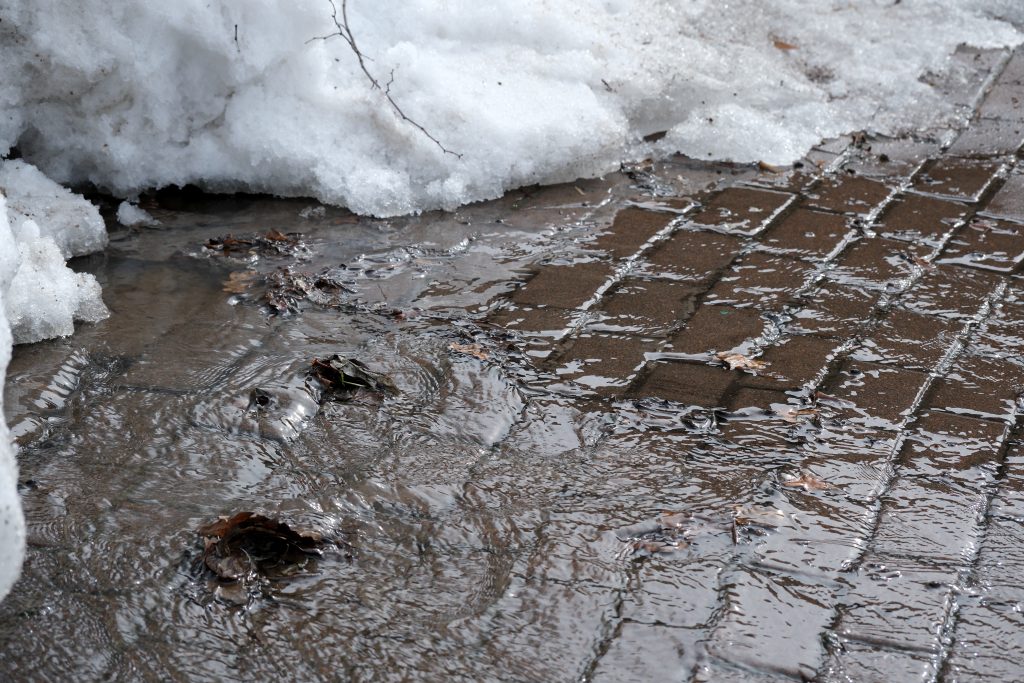
When snow melts in cities, the water ends up on sealed surfaces: asphalt and concrete. Furthermore, a situation like this year can occur – due to frozen ground, infiltration was difficult, and green areas were almost like concrete, as the water ran off rather than soaked in. Instead of retention, we see rapid runoff into storm sewers, resulting in overloading of the system and water flowing out of the city. In many cities, storm sewer systems were designed to quickly drain water, not retain it. Additional consequences include local flooding and the loss of water that could otherwise remain in the urban ecosystem, for example, to support plant growth.
A major urban problem is the lack of consideration for retention in urban planning. Retention, or the ability to retain water where it falls, is crucial in times of increasingly frequent droughts. In cities, it is limited by:
- sealed surfaces
- lack of green spaces
- sewer systems that drain water
The result of such development is water that quickly disappears from the city, instead of feeding the soil and vegetation. Therefore, urban soil rarely has the ability to act as a “container” where water is stored until needed, i.e., in spring and summer.
Introducing Blue-Green Infrastructure
Blue-green infrastructure is a system of nature-based solutions that: retain water, slow its runoff, and improve the city’s microclimate. There are many specific solutions that help retain water in cities and reduce the effects of both drought and flooding. Here are some of them:
1. Retention basins built in areas where rainwater can accumulate. These are shallow depressions in the ground where water from rainfall and snowmelt first collects and then slowly soaks into the soil. The basins function to store water, reduce flooding, and support vegetation.
2. Rain gardens are special plant beds, usually built along sidewalks. They collect water that runs off streets and roofs. They filter the water and help it percolate into the ground. This enhances retention and also serves an aesthetic function in cities, adding color and charm to areas that would otherwise remain paved.
3. Green tracks are a modern infrastructure solution in which the space between the rails is filled with vegetation instead of concrete. They improve aesthetics, dampen noise, reduce the urban heat island effect, and support stormwater retention.
4. Retention parks are green spaces that serve as water storage areas during heavy rainfall. Often, they are simply areas for recreation and encounters with nature, which are also decorated with pond-like retention reservoirs.
5. Openwork parking lots are ecological, permeable surfaces that allow rainwater to drain into the ground and prevent puddles. They are most often made of concrete slabs or plastic grids. They allow for the addition of greenery or filling the space with aggregate.
The Importance of Blue-Green Infrastructure Solutions During Snowmelt
With the unstable winters we’ve been experiencing in recent years, instead of slow snowmelt over weeks, we’re more likely to see rapid snowmelt, with snow disappearing within days. Blue-green infrastructure slows water runoff, reduces the risk of flooding, and increases retention in the city.
At the same time, these solutions provide a range of benefits to the city throughout the year. Benefits for the city can be divided into four categories:
- hydrological: water retention, groundwater recharge
- climatic: cooling the city in summer – mitigating the urban heat island effect, improving the microclimate
- ecological: increasing biodiversity, plant irrigation
- social: more green spaces, improved public spaces, more nature-based recreation areas
Changing winter weather patterns make urban water management increasingly important. With shorter winters, faster snowmelts, and heavy rainfall, cities should invest in retention, blue-green infrastructure, and nature-based solutions. This is not only a way to reduce the risk of flooding, but also an investment in the safety, resilience, and quality of life of residents. Properly designed urban spaces can retain water, support nature, and create a more friendly, healthy living environment. In the face of ongoing climate change, such actions are becoming not so much a choice but a necessity.
We also discuss climate change, drought, and ways to retain water in the landscape in the podcasts of the Stop Drought! Start Retention! project. In conversations with experts, we explain how water management is changing in Poland and what solutions help retain water in cities and nature.
🎧Listen to the podcasts: https://stopsuszy.pl/podcasty/
