
 PL

When we think of a new beginning, the New Year often comes to mind. In nature, however, things work differently. Due to processes related to the water cycle, the natural rhythm of the environment renews itself in autumn. This marks the start of a period during which water resources are gradually replenished following the long, intense heat and evaporation experienced over summer.
Why does the hydrological year begin on November 1st?
A hydrological year, much like a calendar year, spans twelve months. In Poland, this period begins on November 1st and ends on October 31st of the following year. The hydrological year is divided into two parts: the winter half-year, lasting from November to April, and the summer half-year, covering the period from May to October.
This division provides a clearer perspective on the water cycle in nature, allowing for an accurate calculation of the water balance for a given region or the entire country. The calendar year, by contrast, does not align well with certain natural processes occurring on Earth. Consequently, for the purposes of water management, the hydrological year serves as a more effective framework for tracking a cycle that encompasses the autumn accumulation of water, its storage throughout the winter, the spring thaw, and the summer processes of evaporation and resource depletion.
In Poland, the turn of October and November serves as a conventional boundary between these phases. As a general rule, this is when the growing season – during which most plants absorb the greatest amounts of water – comes to an end, while lower air temperatures reduce water loss through evaporation. At the same time, the arrival of November brings an increased likelihood of snowfall, meaning that precipitation can be stored in the form of a snowpack.
Autumn and winter – a time for replenishing water resources
The winter half-year plays a crucial role in the renewal of water resources. During summer, intense heat and evaporation lead to the loss of significant quantities of water; consequently, the autumn and winter months serve as a period of recovery for the natural environment, during which water deficits are gradually replenished.
If there is significant rainfall in the autumn, soil moisture levels may rise. As water infiltrates the soil, it gradually replenishes deeper layers; under highly favorable conditions, it can even reach aquifers and recharge groundwater. This process is particularly important during prolonged, persistent droughts, when water scarcity begins to affect even the deeper layers of the soil.
During winter, some precipitation is initially retained in the form of snow. The snowpack acts as a natural water reservoir; as it melts, it replenishes the soil, water bodies, and groundwater. However, this process does not unfold the same way across all of Poland. The rate of snowmelt and the condition of the ground can significantly hinder water infiltration. If the ground is completely frozen and the snow melts rapidly, the water has no chance to penetrate into the deeper soil layers. Instead, it quickly flows off into water bodies, failing to improve the overall water balance.
Unfortunately, it is important to remember that the total amount of precipitation – even if significant – is not in itself an indicator that water resources have been replenished. Other factors play a crucial role, including the timing and intensity of rainfall, air temperature, soil conditions, and the permeability of the ground surface. In terms of natural water retention, regular, moderate rainfall spread over a long period is far more beneficial than intense downpours.
This is why the period from November to April is so critical for mitigating the effects of drought; it is during these months that conditions are established which can ultimately determine the availability – or scarcity – of water in the months that follow.
How significant is the timing of a water shortage?
Neither a drought nor its consequences end with the passing of summer. If a drought occurs as early as the beginning of autumn, it can be catastrophic for agriculture. In the post-summer period, many plants still require adequate hydration, and some are only just entering a new stage of development.
Crops grown for animal feed are one such example. If adverse conditions arise and water is scarce, their growth can be severely stunted, leading to lower yields. Consequently, farmers may face difficulties in securing enough feed for their livestock.
Autumn drought is also particularly dangerous for winter cereals – crops sown in autumn that overwinter in the fields. This group includes, among others, wheat, rye, triticale, and barley. Once sown, the seeds require adequate soil moisture to begin germination. In overly dry soil, the emergence of these plants can be significantly delayed, uneven, or even completely inhibited.
A lack of water also hinders the development of young plants before the onset of winter. Poorly developed winter crops may struggle to survive freezing temperatures, which leads to a decline in their overall condition and lower yields the following year.
What do hydrologists observe at the beginning of a new hydrological year?
November 1st marks the start of a new period of measurements, analyses, and observations used to assess the state of water resources in Poland. This process involves more than just checking the amount of precipitation that has fallen in recent days; it also entails studying changes within the water cycle. Key aspects of these observations include:
- precipitation – its total amount, intensity, and distribution over time; these factors help determine whether conditions are favorable for replenishing water deficits
- soil moisture – indicates the amount of water available within various layers of the ground; this is important both for plants and for the processes that recharge groundwater
- river water levels and flow rates – allow for the assessment of the hydrological situation and the monitoring of changes in the volume of water flowing through watercourses
- groundwater levels – show how the resources stored beneath the Earth’s surface are changing and whether they are being replenished
- snow cover – its presence, thickness, and extent are significant for estimating the potential recharge of rivers and soil via meltwater
Hydrologists also compare current information with data from previous years. This allows them to assess whether new measurements fall within a typical range or, conversely, point to a deepening water deficit. Analyzing these parameters also helps in better identifying threats related to hydrological drought, as well as evaluating the risk of high water levels, localized flooding, and major floods.
What does the start of a new hydrological year signify?
Unfortunately, the arrival of a new hydrological year does not automatically resolve existing water shortages. On the contrary, the state of water resources at the beginning of November serves as a crucial benchmark for assessing and attempting to forecast what may occur in the months ahead.
A dry autumn and winter, characterized by low levels of snow and rainfall, mean that there is insufficient water to replenish the soil for the months ahead. Consequently, spring will begin with a water deficit – one that is set to deepen as temperatures rise and plants enter a period of intensive growth.
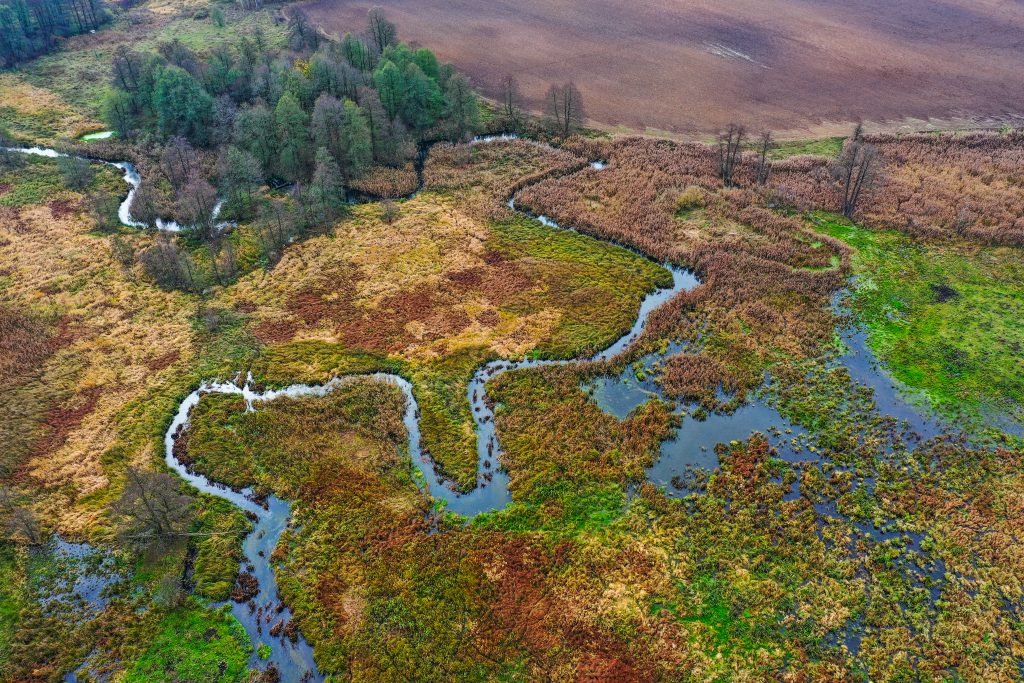
Therefore, our collective response should go beyond merely monitoring the hydrological situation. We must take concrete steps to enhance water retention. Key measures include protecting wetlands, renaturing rivers, restoring floodplains, capturing rainwater, and increasing soil water retention. All these actions help slow down water runoff, ensuring that water remains in the environment for as long as possible.
The current hydrological year, which began in early November, serves as a reminder that the fight against drought is just as relevant during the autumn and winter months. Water requires time and the right conditions to replenish its reserves, infiltrate the soil, and recharge groundwater. For this reason, addressing the impacts of drought should be a year-round endeavor, rather than merely a reactive measure taken in response to the challenges that arise during summer heatwaves and periods of intense evaporation.
