
 PL

When we talk about drought, the first associations are usually obvious: parched fields, difficulties for farmers, low river levels, and restricted access to water. We much less frequently consider that a lack of water can also affect the ability of power plants to operate at full capacity.
Yet, water security and energy security are closely linked. Water is essential not only for agriculture and households but also for the energy sector – both for generating electricity in hydropower plants and for cooling conventional power generation units. When water becomes scarce, the issue quickly ceases to be merely an environmental problem; it also becomes an economic challenge.
October 13th marks the International Day for Disaster Risk Reduction. It serves as a timely reminder that effectively mitigating the consequences of extreme weather events begins long before their most severe impacts are felt. In the case of drought, this primarily means preparing the economy for periods of water scarcity.
Drought is not just a problem for farmers
The effects of drought are felt in many different ways. In the natural environment, they lead to reduced flows in rivers, lower water levels in lakes and reservoirs, poorer water quality, and deterioration of the living conditions of living organisms. In agriculture, lack of water means lower yields, in forestry – weakening and drying out of trees, and in fishing – deterioration of the living conditions of fish and other aquatic organisms.
Drought also has a specific social dimension. Limited access to water hinders everyday functioning and affects the quality of life. In extreme cases, there may be restrictions on the use of water by residents, and their violation may even result in financial penalties.
The economic effects of drought are also becoming increasingly significant. Water shortage may lead to significant losses in plant, animal and fishery production, and thus to an increase in production costs and reduced efficiency of technological processes that require water. Ultimately, some of these costs may be passed on to consumers in the form of higher prices and lower product availability.
The energy sector needs water
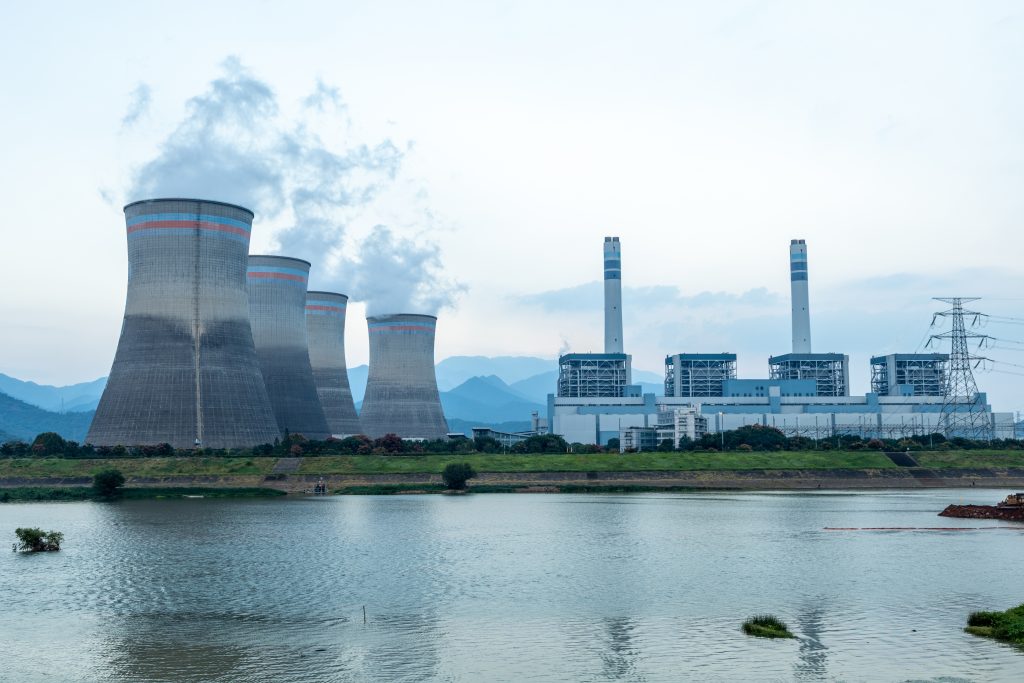
Water is used in many processes related to electricity generation. In conventional and nuclear power plants, it primarily serves to cool the facilities, whereas in hydroelectric power plants, it is used directly to produce energy.
According to the European Environment Agency, the cooling of power plants accounted for an average of approximately 36% of total water abstraction by the economic sector in the EU between 2000 and 2022.
For power plants that draw water from rivers, problems arise particularly when low flow, low water levels, and high temperatures occur simultaneously. Under such conditions, the capacity to abstract water – and to use it effectively for removing heat from the facilities – is diminished. Consequently, drought can impact the energy sector in two ways: it limits the amount of water available for cooling power plants, while also reducing the potential for energy production in hydroelectric power plants.
Hydropower plants – clean energy, but dependent on water
Hydropower is one of the most efficient renewable energy sources. However, its operation is directly dependent on hydrological conditions. During droughts, river flow rates drop, and the volume of water entering reservoirs decreases. This means less water is available to drive turbines. If a drought is prolonged and covers a large area, the decline in energy production can be significant.
This is well illustrated by the experiences of countries where hydropower plays a particularly major role. Venezuela, for instance, saw severe droughts in 2016 and 2018 that led to very low water levels in hydroelectric reservoirs, which in turn contributed to power supply interruptions.
This does not necessarily mean that hydropower is inherently unstable. It does, however, highlight a much more critical point: today, energy security cannot be analyzed in isolation from water security. The more an energy system relies on the availability of water, the more important it becomes to manage water resources responsibly and to prepare for periods of drought – with water retention playing a particularly vital role.
Drought limits energy production in Europe
In recent years, the impact of water scarcity on the energy sector has also been felt in European countries. The year 2026 provided particularly clear examples from Central Europe, where high temperatures, drought, and very low river levels constrained the operations of power plants that rely on water for cooling. One such case is the Krško Nuclear Power Plant in Slovenia, which uses water from the Sava River for its cooling system. In August 2026, due to persistent extreme hydrological and meteorological conditions, the operator began temporarily reducing the reactor’s power output. On August 6, output was lowered to 80% to maintain the required environmental parameters regarding the temperature of the water in the Sava. Once conditions improved, the plant returned to full capacity on August 18.
Similar issues also arose in other countries located within the Danube river basin. Low river flow and high water temperatures limited the ability to use the water for cooling nuclear power plants. Under such conditions, it may become necessary to reduce the power output of generating units to prevent the temperature of the water discharged from the facilities from exceeding permissible limits.
In Hungary, difficult hydrological conditions affected the operation of the Paks nuclear power plant, which relies on the Danube for water used in its cooling system. Similarly, in Romania, low water levels in the Danube impacted the Cernavodă nuclear power plant, leading to the temporary disconnection of one of its units from the grid. Water shortages also constrained power generation at hydroelectric plants, as reduced river flow meant less water was available to drive turbines.
These limitations in energy production necessitated measures to ensure a stable supply. Hungary and Romania were forced to rely more heavily on electricity imports, which entailed additional costs. At the same time, calls were made to reduce energy consumption, and some industrial enterprises adjusted their operations to cope with the more challenging energy situation.
These examples demonstrate that the consequences of a drought are not confined to individual power plants. Reduced availability of domestic generation capacity can increase reliance on energy imports, drive up procurement costs, and affect the operations of businesses. Consequently, a prolonged water shortage becomes not only an environmental issue but also a challenge for energy security and the economy as a whole.
Poland is also experiencing the effects of drought in its energy sector
The problem is not limited to Southern Europe or the countries located within the Danube river basin. Poland, too, is feeling the effects of low water levels, which in turn impact the operation of power plants.
This occurred in August 2026, when low water levels in the Vistula River, combined with high temperatures, affected the operations of two power plants: Kozienice and Połaniec. On August 4, the operation of certain power generation units at both facilities was temporarily curtailed. In total, approximately 1.3 GW of available capacity was temporarily removed from the power system.
The cause lay in operational conditions linked to the state of the Vistula. Power plants rely on river water for technological processes, including cooling. When water levels and flow rates are low, the ability to draw water becomes restricted. This issue can be further exacerbated by high water temperatures, as warmer water has a reduced capacity to absorb heat from the plant’s systems.
Consequently, a drought – ostensibly a hydrological issue – can evolve into a challenge for the national power system.
Energy security begins with water
The increasing frequency and intensity of droughts mean that the relationship between water resources and the energy sector will require ever-greater attention. The challenging hydrological situation presents Poland with the task of ensuring a stable energy supply.
Furthermore, constraints in one sector can have a ripple effect on other branches of the economy. Energy is essential virtually everywhere – in industry, services, agriculture, transport, and households. Consequently, any limitation on energy production capacity can trigger further negative economic consequences.
From the perspective of energy security, it is therefore crucial not only to ensure sufficient generation capacity but also to account for water availability and shifting hydrological conditions when planning the operation and development of energy infrastructure.
In the energy sector, the development of solutions that reduce water demand can play a significant role. The European Environment Agency, for instance, points to the potential for employing more efficient cooling systems, such as recirculating cooling circuits or dry cooling technologies.
Resilience is built before a crisis
The consequences of drought can ripple across various economic sectors – from agriculture and industry to the energy sector and households. Examples from Poland and other countries demonstrate that water is a fundamental component of both economic and energy security. Consequently, addressing the impacts of drought should go beyond mere crisis response; by the time a crisis hits, it is already too late for preventive measures. Instead, action must be taken proactively: increasing water retention, protecting water resources, using water rationally, and adapting infrastructure to changing climatic conditions.
The International Day for Disaster Risk Reduction serves as a reminder of a simple principle: resilience is built before a crisis arrives. In the context of drought, this means one thing – we must manage water wisely today if we wish to mitigate risks tomorrow.
