
 PL
PL

Traditionally, World Wetlands Day is celebrated worldwide on February 2nd. This international holiday was established to highlight the crucial role of wetlands in the functioning of ecosystems and the protection of water resources. This date commemorates the signing in 1971 of the Ramsar Convention – one of the oldest global environmental agreements aimed at protecting wetlands of international importance.
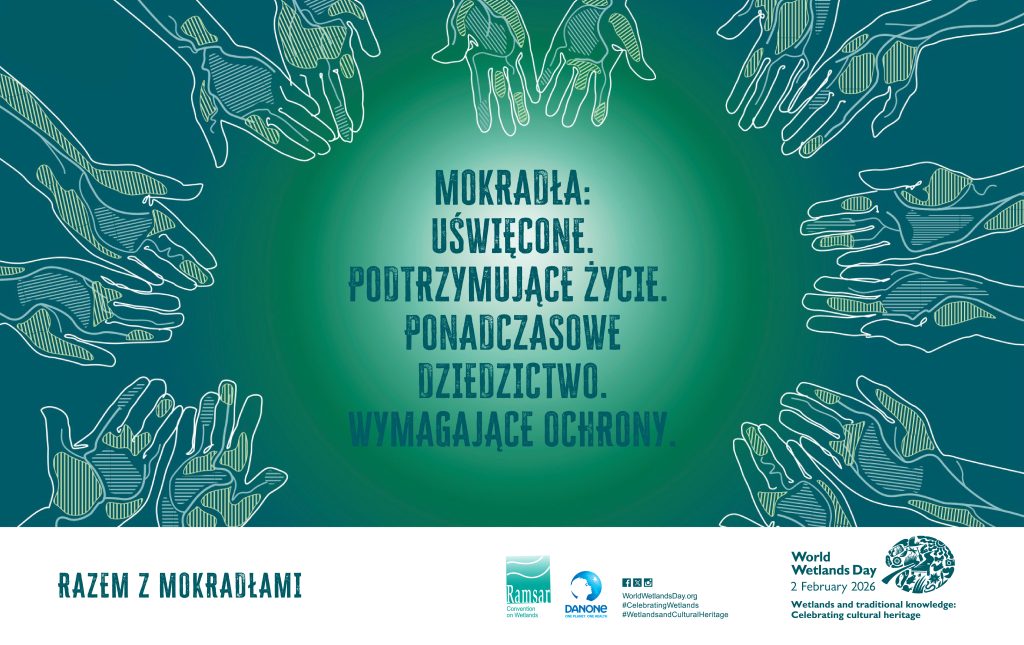
In 2026, the celebrations will be held under the theme: “Wetlands and Traditional Knowledge: Celebrating Cultural Heritage.” This theme highlights the fact that wetlands are not only natural sites but also spaces deeply rooted in the history, culture, and identity of local communities. Traditional knowledge, passed down from generation to generation, has played and continues to play a crucial role in the protection of these ecosystems and in sustainable water management – especially in times of increasing drought and climate change. This year’s celebration graphics highlight the global connection of people to wetlands and the importance of traditional knowledge passed down from generation to generation.
“Teach your children what we taught our children: that the Earth is our mother. Whatever happens to the Earth, happens to the children of the Earth. … This we know: the Earth does not belong to man – man belongs to the Earth.” – Chief Seattle (Sealth), Chief of the Suquamish Nation.
What Are Wetlands and Why Are They so Important?
Wetlands are a diverse group of ecosystems that include marshes, peat bogs, riverine floodplains, wet meadows, oxbow lakes, river deltas, estuaries, as well as shallow lakes and ponds. A common feature of these areas is their periodic or permanent water saturation, which determines their unique biological and hydrological properties.
Although wetlands cover only a few percent of the land surface, their importance is disproportionately large. They are among the most productive ecosystems on Earth, and at the same time, they are among the most threatened – over the last 100 years, the world has lost over 60% of its wetlands, mainly due to land improvement, river regulation, urbanization, and intensive agriculture.
Key functions of wetlands include:
- water retention and stabilization of the hydrological cycle
- mitigation of drought and flood impacts
- purification of water from nutrients and pollutants
- carbon storage, especially in peatlands
- protection of biodiversity and habitats for many endangered species
In the context of the growing water crisis, wetlands provide a natural, effective, and long-term response to water stress. Furthermore, the decline in wetlands contributes to climate change, reduced water resource availability, increased community vulnerability to natural disasters, species loss, and impacts human livelihoods and well-being.
Wetlands as a Natural Protective Shield
Drought is increasingly becoming structural and long-term. In Poland, we observe its various forms: meteorological, agricultural, hydrological, and hydrogeological. One key factor exacerbating this problem is the loss of the landscape’s natural ability to retain water.
Wetlands, on the other hand, act like natural sponges: they store water during periods of excess and slowly release it during periods of shortage, replenishing rivers, soils, and groundwater. Their degradation leads to rapid stormwater runoff, lower groundwater levels, and soil desiccation. Restoring and protecting wetlands is therefore one of the most effective and least expensive tools for counteracting the effects of drought, significantly more sustainable than technical solutions based solely on infrastructure.
Traditional Knowledge – A Forgotten Resource in Wetland Protection
The theme of this year’s World Wetlands Day highlights the traditional and local knowledge that has shaped people’s relationships with wetlands for centuries. In many regions of the world, communities living near wetlands have developed ways of using these areas that have not led to their degradation but have supported their sustainability. Examples include:
- extensive use of wet meadows
- seasonal grazing and mowing
- traditional fishing and gathering
- natural methods of water regulation without permanent drainage
Poland also has a rich cultural heritage associated with wetlands – from the use of river valleys and marshy meadows to local water management practices in agricultural landscapes. With the increasing intensification of agriculture and land improvement, many of these practices have been abandoned, leading to environmental degradation and increased susceptibility to drought.
Contemporary wetland conservation increasingly emphasizes the need to combine scientific knowledge with the experience of local communities, treating them as complementary sources of knowledge rather than competing approaches.
Wetlands as a Component of Climate Change Adaptation
Climate change is intensifying extreme hydrological phenomena – both droughts and heavy rainfall. Wetlands play a key role in adapting to these changes, acting as natural climate buffers. Peatlands are particularly important, storing vast amounts of carbon, regulating the local microclimate, and stabilizing water conditions over large areas. Their drainage not only increases the risk of drought but also leads to greenhouse gas emissions. Therefore, the protection and restoration of wetlands simultaneously address climate, water, and environmental issues.
World Wetlands Day – a Call to Action
World Wetlands Day is not just a symbolic date but also a real opportunity to reflect on the direction of water and spatial management. This is also a time to:
- increase public awareness of the importance of wetlands
- promote the protection and restoration of natural retention
- incorporate traditional knowledge into environmental planning
- support nature-based solutions
For the “Stop Drought! Start Retention!” campaign, wetlands are one of the pillars of effectively combating water stress. Their protection and restoration is an investment in water security and the resilience of ecosystems to the devastating consequences of droughts.
The theme of World Wetlands Day 2026 reminds us that environmental protection is not solely about modern technologies and legal regulations. Equally important is restoring the relationship between humans and nature, based on respect, knowledge, and long-term thinking. This, beyond just protecting nature, will help us preserve our cultural heritage. Wetlands are a living example of how nature – if allowed to function – can effectively protect us from the effects of drought and climate change. Their preservation is our shared responsibility.
