
 PL
PL

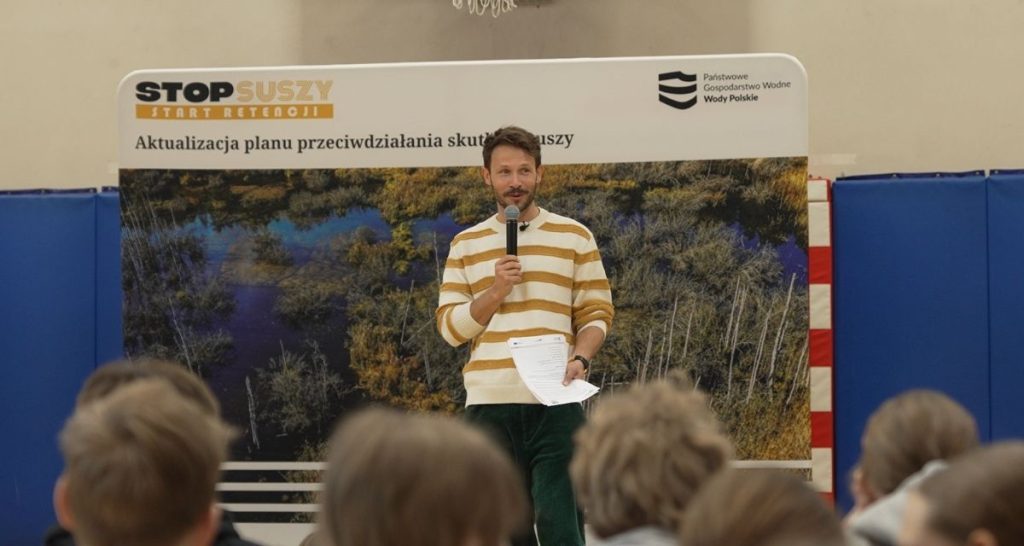
What does environmental education of students look like in practice? What do children know about drought and ways to save water? We visited one of Warsaw’s elementary schools to find out. We invite you to read the article and watch the video on our YouTube channel, which details our meeting at the Primary School with Integrated Departments No. 41 named after the Home Army Soldiers “Krybar” in Warsaw.
As part of the “Stop Drought! Start Retention!” project, we organized a meeting with fourth- and fifth-grade children on March 17, 2026. A total of 60 students participated. Representatives of Polish Waters were there: Rafał Jakimiak, project coordinator, and Mateusz Banasiuk, project ambassador.
The School’s Success
The school won a competition for a stormwater management project and, thanks to that, a rain garden was created on the school grounds. Additionally, a rainwater tank was installed, which is used, among other things, to water the green areas around the school building. Both of these measures significantly contribute to retaining water in the landscape, where it falls – in other words, to retention.
Such solutions are crucial in a city where large areas of concrete and buildings prevent water from being absorbed into the soil.
Shaping the Right Attitudes
As part of the lesson, a representative from Polish Waters and Mateusz Banasiuk led a discussion with students about drought and water retention in Poland. A quiz was also held with questions for the students, which the children eagerly answered.
The children’s active participation in the conversation went beyond just offering interesting solutions and often referencing ways in which they protect water in their own homes. The children’s knowledge level was very high; they understood the threat of drought and knew many excellent ways to keep water. As part of the interactive portion of the lesson, open-ended questions were asked, and a YES/NO quiz was also conducted.
For their active participation in the lesson, the children received gifts from the organizers in the form of educational materials: gift sets and informational brochures.
During the session, the students learned about the importance of water and why it matters to care for it every day. The instructors explained in simple terms what a drought is – a time when there’s no rain for an extended period, leaving rivers, soil, and plants deprived of water. The children also learned about the concept of water retention, which involves keeping water, for example, in special reservoirs.
The students also learned that water is a very precious resource, one we couldn’t live without – people, animals, and plants need it. That’s why it’s called a strategic resource, meaning one that has enormous significance for our lives and future. The session also highlighted climate change and the increasingly frequent extreme weather events, such as prolonged droughts and sudden, intense rainfall that causes floods.
The meeting was practical in nature – the children explored what each of us can do to save water. They learned simple ways, such as turning off the tap while brushing our teeth and choosing short showers instead of baths. They also learned how to collect rainwater and use it, for example, for watering plants.
The role of greenery in cities was also an important element of the discussion. The students discovered that trees, lawns, and wildflower meadows help retain water and protect against the harmful effects of drought. Through such activities, everyone – even the youngest – can have a real impact on environmental protection.
Video Coverage of the Meeting
The event was recorded and published on YouTube. The video includes a video coverage of the meeting, student statements, and comments from experts and organizers. The video includes interesting water-saving methods suggested by the children, as well as creative ideas for educating children about drought and water retention.
Watch the video coverage of the event on our YouTube channel!
Environmental education from an early age has a real impact. By making children aware of environmental issues, we can teach them good habits from a young age and help them find creative ways to combat drought, which they can use at home.
Schools should also be role models of good practice. Through adults’ involvement in children’s education and showing them real-world actions and their effects, we help kids understand why water retention is so important. Together, we can counteract the effects of drought.
