
 PL
PL

The long-awaited summer has arrived – sun, vacations, and high temperatures. After a long winter that surprised us with more snow and lower temperatures than in recent years, we can finally enjoy some fresh air, drink iced lemonade, and put on short sleeves. However, summer isn’t just about sunshine, vacations, and relaxation. It’s also the period when drought becomes more pronounced and noticeable, and can affect not only agriculture and the prices of fruit and vegetables . Drought can also affect our holiday plans.
The other face of hydrological drought
Drought develops in several stages. The associated threats depend on the phase of drought’s development – ranging from atmospheric drought through agricultural and hydrological drought to hydrogeological drought. During the summer, we often struggle with hydrological drought – in other words, a shortage of water resources in rivers and lakes. Its symptoms include low water levels and low flows.
At first glance, it might seem that this problem primarily affects agriculture and businesses that rely on local water resources. Unfortunately, the situation is much more complex. The threat of hydrological drought is multifaceted and also affects the leisure and tourism sectors.
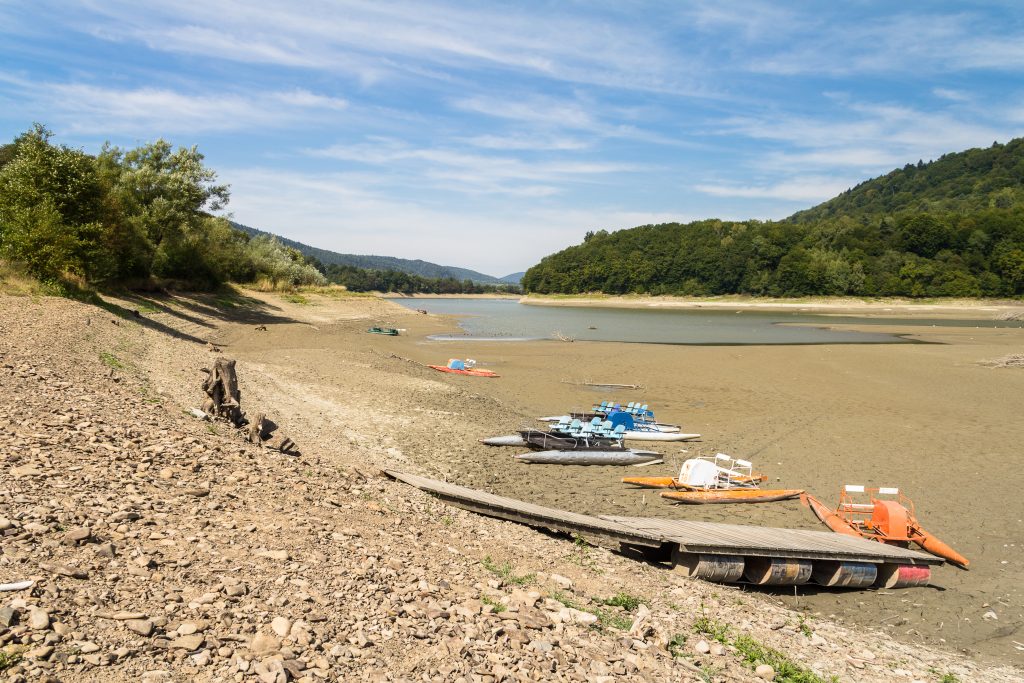
The most obvious consequence of hydrological drought in tourism is restrictions on water transport. If water levels are too low, boats, ferries, and sailboats are unable to navigate the shallows. Kayaking is also becoming increasingly difficult. In short, we are losing the opportunity to enjoy one of the attractions most associated with summer and water recreation. Therefore, we must focus on mitigating water storage. Without retention, the water level will not be replenished in time, and sailing camps will become a thing of the past.
Another serious problem caused by hydrological drought combined with heatwaves is the closure of swimming areas due to cyanobacterial blooms. Unfortunately, low water levels and high temperatures favor their growth. For this reason, we often have to forgo active entry, swimming, and cooling off in the water, which is very disappointing on hot summer days, especially during vacations.
During summer heatwaves, we can also encounter the problem of hydrological low flows, which are periodic, long-term reductions in flows and water levels in streams (e.g., rivers and streams) below values considered normal. During low flows, we observe lower lake levels and low water levels in rivers, which pose a significant problem for kayakers and others seeking active recreation by the water.
The drying up of iconic water bodies should be a wake-up call for all of us. Places that could be taken for granted a dozen or so years ago when it comes to choosing a holiday destination are no longer so obvious today.
Impact of drought on tourism
Drought is also a significant burden for fishing enthusiasts. Fishing tourism is becoming limited due to the drying up of lakes and rivers. At lower river levels and higher water temperatures fish may die off due to hypoxia (a drastic decrease in the amount of oxygen dissolved in the water, leading to suffocation and mass deaths of fish and other aquatic organisms) or temperatures that are too high for their habitat.
Another place where drought can visibly impact our vacations are forests. During periods of high fire risk (when the moisture content of the forest floor drops below 10% for five consecutive days), foresters in a given forest district may decide to close the entire forest area. During such periods, entering and driving into forest areas is strictly prohibited. Consequently, forest tourism becomes limited.
Drought poses a problem for regions and individuals who rely on tourism. If a body of water renowned for its beauty begins to dry out, a local forest is closed to visitors, or river levels become unsuitable for boats, those who make their living from tourism will face a significant financial challenge. After all, no visitor will want to go kayaking if they have to push their kayak across shallow water for half the route.
In tourist areas, the pressure related to water consumption is naturally greater. After all, it’s easier to take long showers if we’re not responsible for paying for the water used at a hotel or in a rental cottage. However, we must remember that we all bear the cost – not only financially, but also in the form of dried-up water reservoirs, local rivers and lakes.
Methods for combating drought in tourism
Due to the persistent drought problem, which recurs annually, we must address the need to adapt recreational infrastructure to our current needs. Here are some of the methods:
1. Small-scale water retention and rain gardens
Instead of discharging rainwater into the sewer system, systems are designed to collect and filter it. Examples include rain gardens and bioretention basins in parks and residential areas, which absorb excess water and irrigate vegetation during droughts.
2. Modifying reservoirs
Existing recreational and park ponds are being revitalized, including by sealing them with natural clays, introducing hydrophytes (which purify water), and creating buffer zones.
3. Appropriate selection of greenery
Trees and shrubs requiring intensive watering are replaced with drought-resistant species, and dry gardens (gravel, steppe) are being created. Additionally, flower meadows are being planted instead of traditional lawns. This allows recreational areas to be maintained in good condition without the need to use tap water for watering.
4. Permeable surfaces
Wherever possible (e.g., park paths, playground edges), asphalt or concrete surfaces are avoided. Permeable surfaces (aggregates, lawn grids) are used, allowing water to permeate directly into the ground.
Let’s act today to enjoy summer
The drought is preventing us from fully enjoying summer. Restrictions on certain activities, such as motorboats, fishing, or swimming in lakes, imposed on some bodies of waters to protect ecosystems, are not something we want to hear about on vacation. To prevent this, we must take care of our water resources, because every drop counts.
Water can be used, but rationally. Water your garden only in the morning or evening, never at noon. The same rule applies to filling swimming pools – ideally between 10:00 PM and 6:00 AM to reduce overloading the water supply system. Furthermore, spray precisely (using a droplet), because traditional sprinklers use enormous amounts of water. Use drip lines that deliver water directly to the roots, minimizing waste. More on how to counteract the effects of drought: link to the video.
Protecting the environment and water resources is our shared responsibility. By working together and using water responsibly, we can continue to enjoy kayaking, swimming in lakes, and safe walks through forests—not only this summer, but also in the future, without having to check water levels before choosing a holiday destination.
